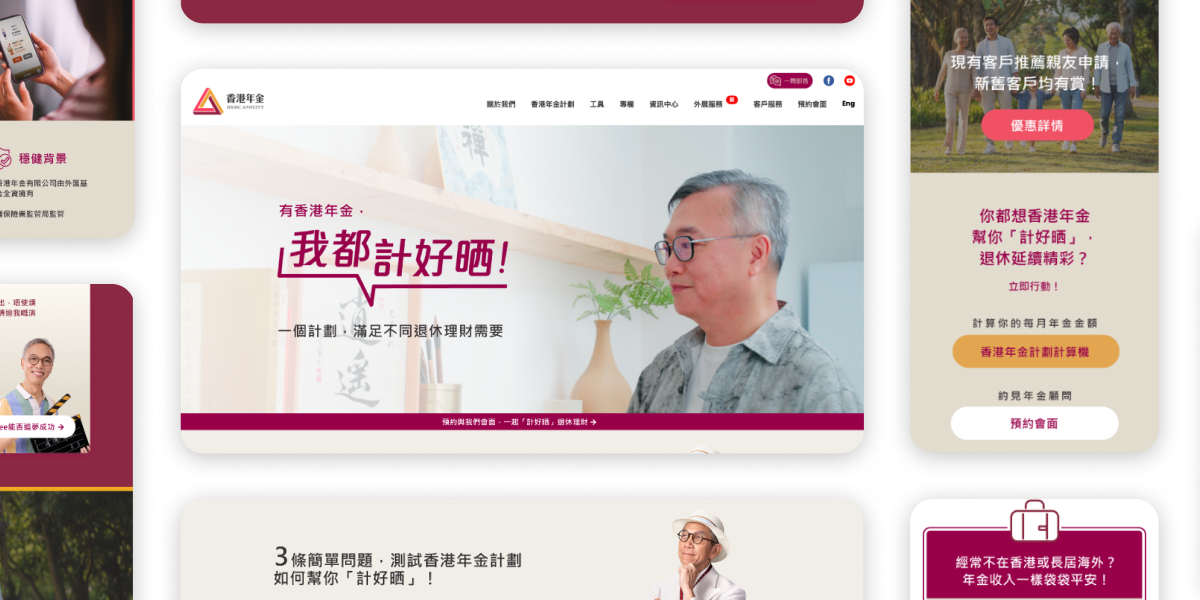
UX / Experience Design
HKMCA Digital Experience Redesign
The legacy experience made it difficult for users to evaluate the product.
Role
UX / Experience Design
Scope
Information Architecture,
Accessibility
The Core Challenge
Instead of helping users make a decision, the system forced them to search for relevant information across disconnected sections.
As uncertainty increased, users dropped off before reaching a decision.
Goal
- → Improve findability
- → Reduce cognitive load
Behavioural Friction

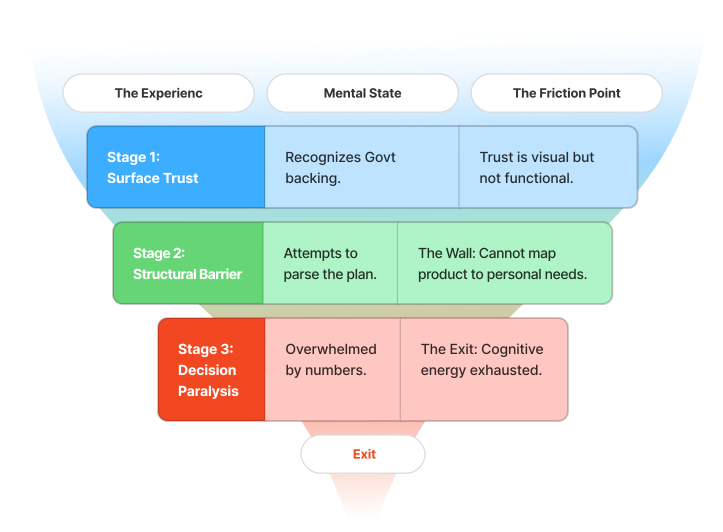
Problem Framing
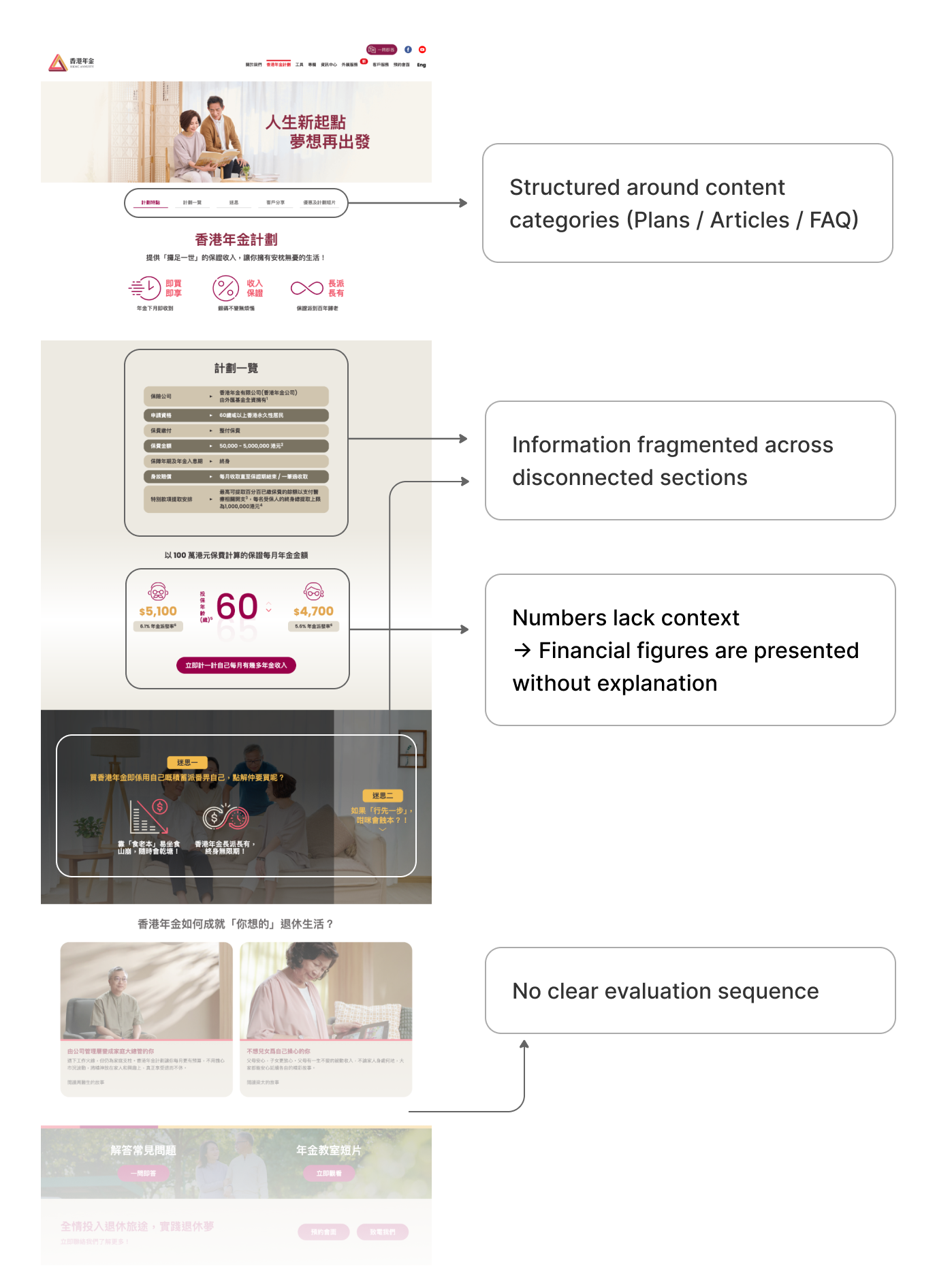
The system was structured around content categories, not decision-making.
User’s Mental Model
“How much will I receive?”
“Is it safe?”
“What fits my situation”
Structural Outcome
Users must manually interpret and connect fragmented information before they can evaluate the product.
→ This increases cognitive effort during decision-making.
Structural Shift:From content-centric to decision-driven
“Is this relevant to me?”
“What is the return?”
“Can I trust this?”
“What should I do next?”
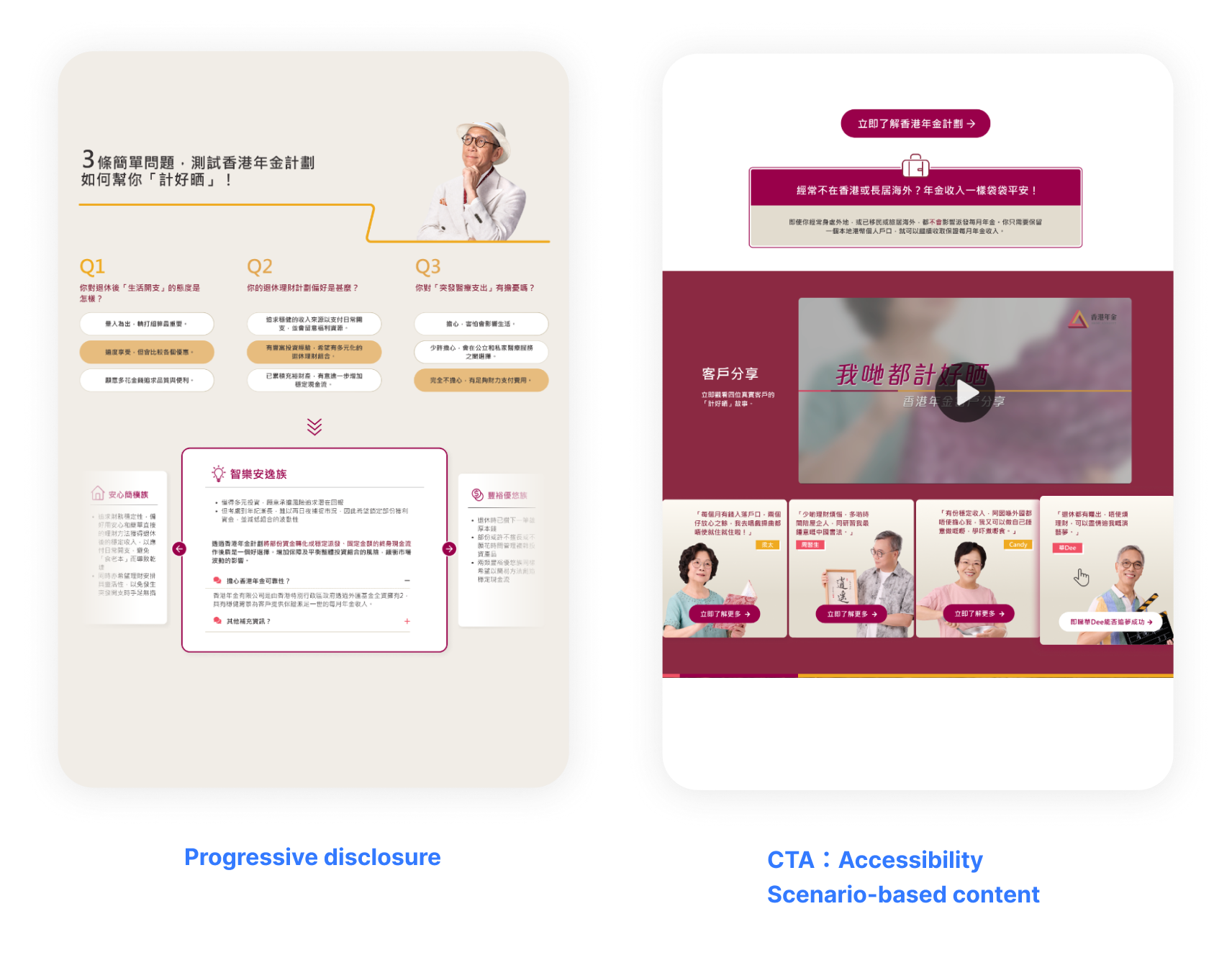
Interaction Decisions
- mapped to behavioural friction
Scenario‑based information structure
→ Maps payout to personal context, reducing interpretation effort.
Progressive disclosure
→ Surfaces key metrics upfront, defers complexity.
Accessibility baseline
→ ≥48px tap targets, ≥4.5:1 contrast, ≥1.8x line spacing,Improved spacing and readability hierarchy.
Operational Constraint
The experience needed to balance:
Compliance‑heavy information
Navigating dense regulatory requirements without cluttering the interface.
Accessibility requirements
Ensuring inclusive design standards (WCAG 2.1 AA) are natively integrated.
Stakeholder content priorities
Balancing institutional business goals with user-centric functionality.
Simplified user comprehension
Translating complex financial/insurance logic into clear, human-readable flows.
The Challenge: Aligning regulatory clarity with a clearer, user-centric decision‑making flow.
Outcome
Faster information recognition
Core value propositions became visible earlier within the browsing flow.
Reduced navigation friction
Simplified structure reduced unnecessary scanning and content switching.
Improved decision clarity
Information hierarchy better aligned with user evaluation behaviour.
Reflection
Reducing initial cognitive load improved scannability and evaluation clarity.
However, financial‑service experiences must balance: speed of understanding, perceived credibility, and depth of information access.
A key next step would be validating whether simplified entry points maintain user trust during deeper evaluation.
Methodology
Project Execution Summary
This project systematically combined the following research and design frameworks:
- Heuristic evaluation
- Behavioural flow analysis
- Information hierarchy restructuring
Accessibility baseline alignment WCAG 2.1 AA
Future Validations
Future iterations would validate trust perception, comprehension speed, and confidence during decision‑making through rigorous, moderated user testing and behavioural analysis.
Confidentiality Note: Selected visuals are intentionally simplified and partially abstracted for portfolio presentation purposes. This case study focuses on information architecture, interaction rationale, and behavioural experience structure rather than proprietary implementation details.
All trademarks and intellectual property belong to their respective owners.