Behavioral Strategy
& Communication
Behavioral Communication Strategy
Building insurance engagement around user understanding.
Role
User insight synthesis,
communication structuring,
stakeholder alignment
Problem & Insight
Young professionals ignored insurance content because it was jargon‑heavy and institution‑focused. On social platforms (Xiaohongshu, Instagram, Facebook), they expected relatable, lifestyle‑oriented content.
Target users trusted real‑life scenarios and lifestyle‑led stories (wellness, travel, light animation) more than brand messages. They avoided serious, didactic communication and preferred accessible, warm formats.
Replaced product‑focused messages with everyday scenarios (e.g., a wellness routine, a travel plan). No abstract insurance terms.
Created a simple content flow: Hook → Scenario → Resolution → CTA. Each step gives only what the user needs at that moment.
Centered the campaign on what users actually care about: wellbeing, lifestyle, and financial freedom. No institutional jargon, no product‑first descriptions.

Wellness & Health Tracking

Micro-Interactions & storytelling
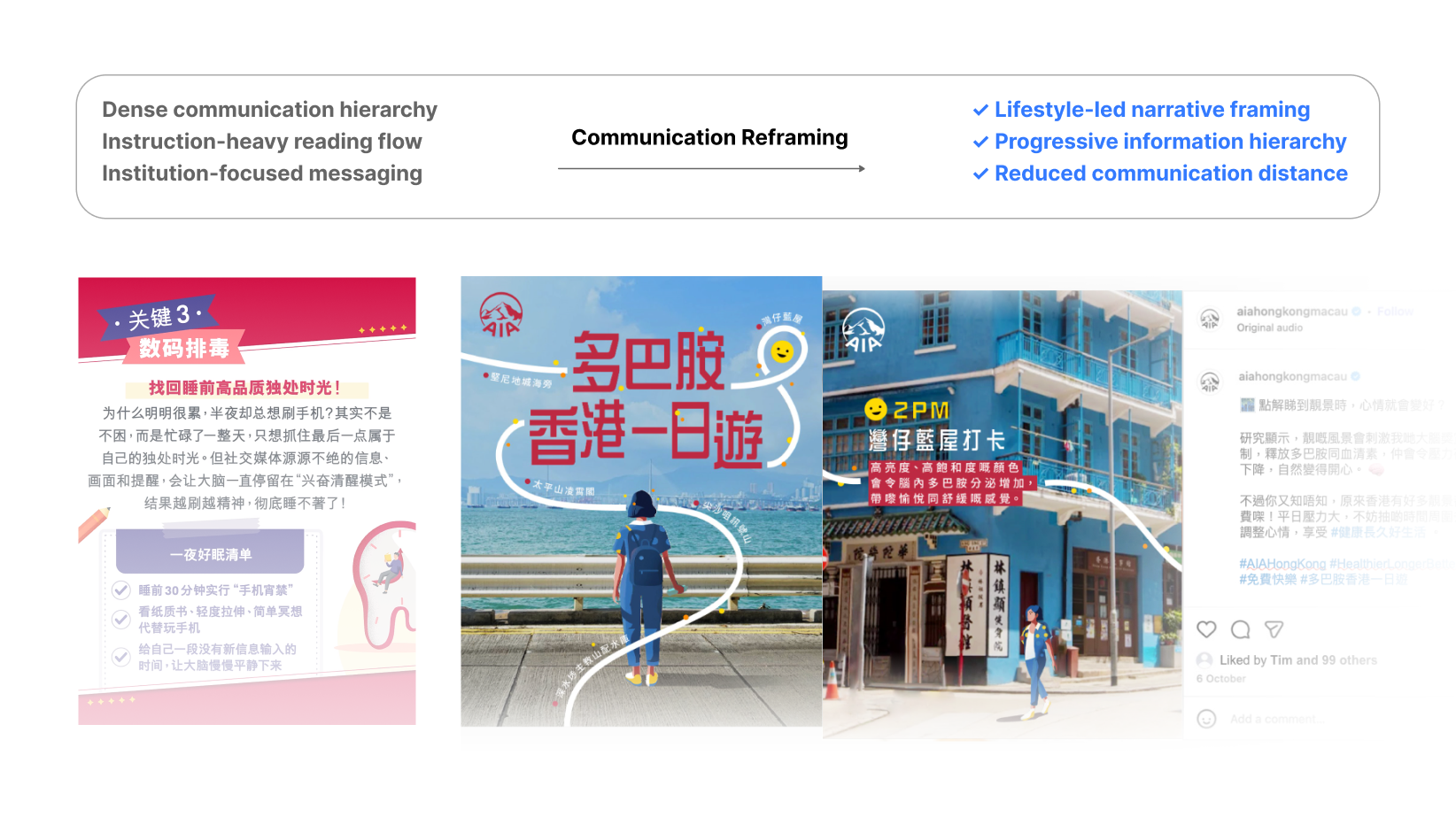
lifestyle-led narratives
- Improved communication relevance for young audience (stakeholder feedback).
- Positive consensus on communication direction.
- Repeatable strategy for campaign development.
Content structure and communication framing directly affect engagement in low‑trust domains (e.g., insurance). User insight can inform communication strategy across teams and channels.
Confidentiality Note: Selected visuals are intentionally simplified and partially abstracted for portfolio presentation purposes. This case study focuses on information architecture, interaction rationale, and behavioural experience structure rather than proprietary implementation details.
All trademarks and intellectual property belong to their respective owners.